
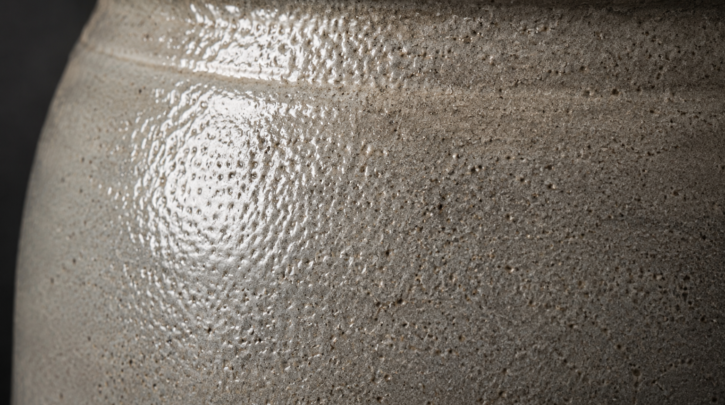

Salt glazing produced the distinctive, textured surface found on much of the American stoneware collected today — a genuinely different chemical process from the glazes used on fine china, and one closely tied to a specific, historically significant American ceramic tradition.
How Salt Glazing Actually Works
During firing, potters threw common salt into the hot kiln, where it vaporized and reacted chemically with the silica naturally present in the stoneware clay body, forming a thin, glass-like glaze directly on the surface — a fundamentally different process from glazes applied as a liquid coating before firing.
The Characteristic ‘Orange Peel’ Texture
This chemical reaction produces a distinctive pitted, textured surface often described as resembling orange peel — a genuinely recognizable tactile and visual characteristic that experienced collectors learn to identify by feel almost as easily as by sight.
Why Salt Glazing Dominated for So Long
Salt glazing was the dominant American stoneware finishing method for much of the 19th century, valued for producing a genuinely durable, functional surface using cheap, widely available salt rather than more complex or expensive glaze materials — a practical technique well suited to the utilitarian purpose most stoneware actually served.
Environmental Concerns Contributed to Its Decline
Salt glazing releases chlorine-containing byproducts into the air during firing, and growing environmental and health concerns around this emission contributed to the technique’s decline over the 20th century as alternative glazing methods became more practical — worth understanding this genuine historical context behind why salt-glazed stoneware became less common over time.
Distinguishing Salt Glaze From Other Finishes
Confirming genuine salt-glaze texture, rather than a different glazing method applied to achieve a similar look, matters for accurate identification — examining the surface closely for the characteristic pitted texture under good light, and comparing against confirmed genuine examples, is the standard way to verify this specific technique.
Salt Glaze and Cobalt Decoration Together
Salt-glazed stoneware and cobalt blue decoration are genuinely separate elements that frequently appear together on the same piece rather than being the same thing — one is the surface finish, the other is the decoration applied before that finish forms; see our stoneware crocks guide for how these two elements combine on typical American stoneware.
Finding Salt-Glazed Stoneware
Confirmed genuine salt-glazed pieces, especially those combined with elaborate cobalt decoration, remain actively sought by a dedicated collector base familiar with the specific visual and tactile qualities this technique produces.
Search current salt-glaze stoneware listings Search salt-glaze stoneware on eBay
A Technique Worth Understanding by Touch
Because the orange-peel texture is such a distinctive physical characteristic, handling several confirmed genuine salt-glazed pieces builds a tactile memory that photographs alone can’t fully substitute for — genuinely worth seeking out in-person examples at a show or through a knowledgeable dealer.
Salt Glaze Beyond Crocks
Beyond crocks and jugs, salt glazing was applied to a wide range of stoneware forms, including jars, churns, and various utilitarian vessels — worth recognizing that this technique isn’t specific to any single form, but rather a finishing method applied across the broader utilitarian stoneware category.
Alkaline Glazes: A Different Southern Tradition
Separate from salt glazing, some regional American stoneware traditions, particularly in the South, used alkaline glazes instead, producing a genuinely different surface appearance — worth knowing this alternative tradition exists so you don’t assume every piece of American stoneware was necessarily salt-glazed.
A Technique That Sometimes Continued Into Modern Studio Work
While large-scale commercial salt glazing declined for the environmental reasons already covered, some modern studio potters have continued practicing the technique on a smaller scale, using contemporary equipment designed to better contain emissions — worth knowing this history isn’t purely a closed chapter, even though the antique pieces covered on this site predate any of that modern revival work.
Understanding this fuller history adds real depth to appreciating an antique piece for what it represents.