 Written by: Pottery Marks Editorial Team
Posted on: July 11, 2026
Written by: Pottery Marks Editorial Team
Posted on: July 11, 2026
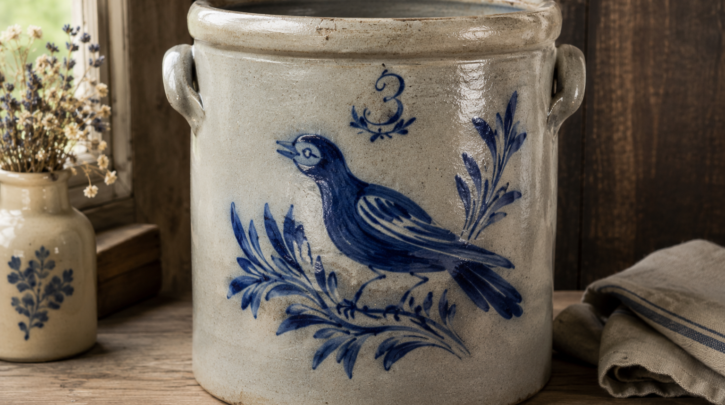
Antique Stoneware Crocks: A Complete Guide
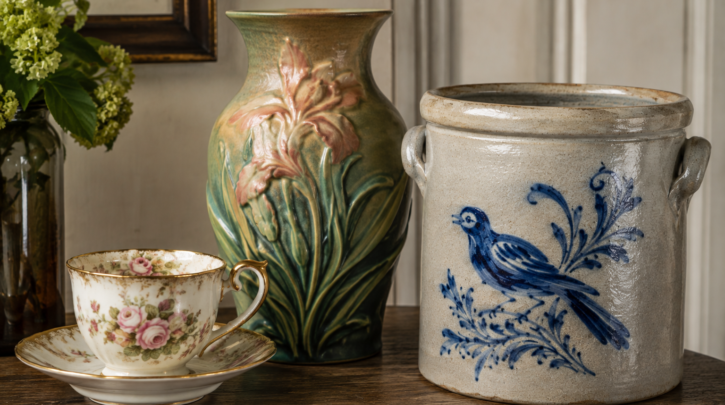
Stoneware crocks were made for genuinely practical purposes — storing pickles, sauerkraut, butter, and other household provisions — yet the decorative cobalt work many potters added to these purely functional vessels has made them one of the most recognized American folk art traditions in antique…
 Written by: Pottery Marks Editorial Team
Posted on: July 11, 2026
Written by: Pottery Marks Editorial Team
Posted on: July 11, 2026
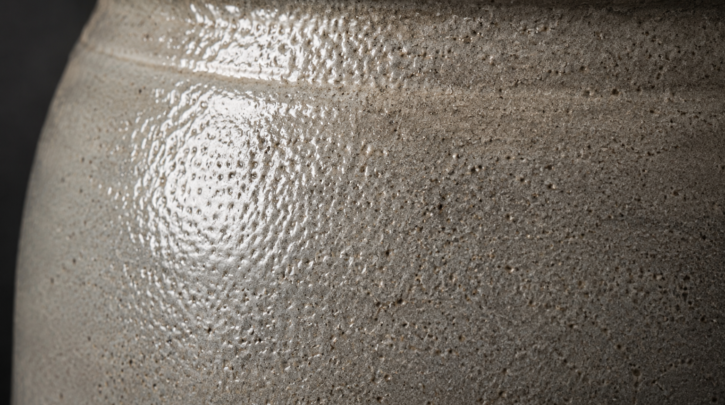
Salt Glaze Stoneware: A Complete Guide
Salt glazing produced the distinctive, textured surface found on much of the American stoneware collected today — a genuinely different chemical process from the glazes used on fine china, and one closely tied to a specific, historically significant American ceramic tradition. How Salt Glazing Actually…
 Written by: Pottery Marks Editorial Team
Posted on: July 11, 2026
Written by: Pottery Marks Editorial Team
Posted on: July 11, 2026
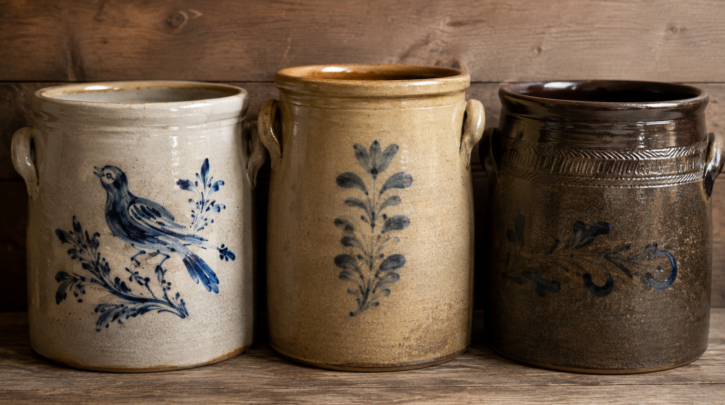
Regional American Potteries: A Complete Guide
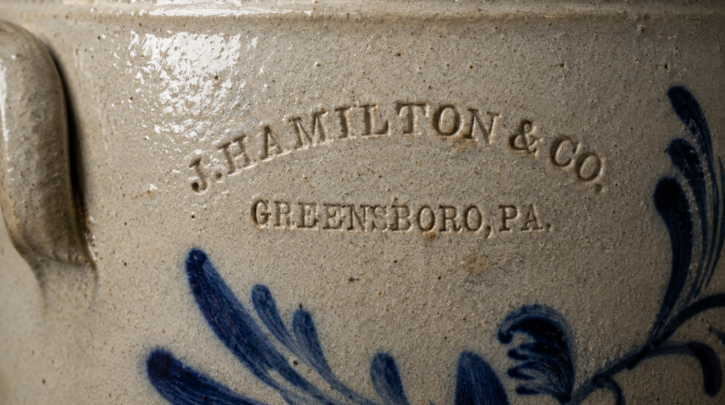
American stoneware production wasn’t a single uniform national industry — different regions developed genuinely distinct traditions, shaped by local clay sources, available transportation, and regional decorative conventions that experienced collectors learn to recognize. Local Clay Sources Shaped Regional Character Stoneware clay wasn’t uniform across the…
 Written by: Pottery Marks Editorial Team
Posted on: July 11, 2026
Written by: Pottery Marks Editorial Team
Posted on: July 11, 2026
Stoneware Marks and Makers: A Complete Guide
Reading a stoneware mark works differently from reading a fine china backstamp, both in how the mark was physically applied and in how much documentation exists for the maker behind it. Impressed and Stamped Marks Unlike the printed or painted marks common on fine china,…
 Written by: Pottery Marks Editorial Team
Posted on: July 11, 2026
Written by: Pottery Marks Editorial Team
Posted on: July 11, 2026
Pottery Value Guide: What Actually Drives Price
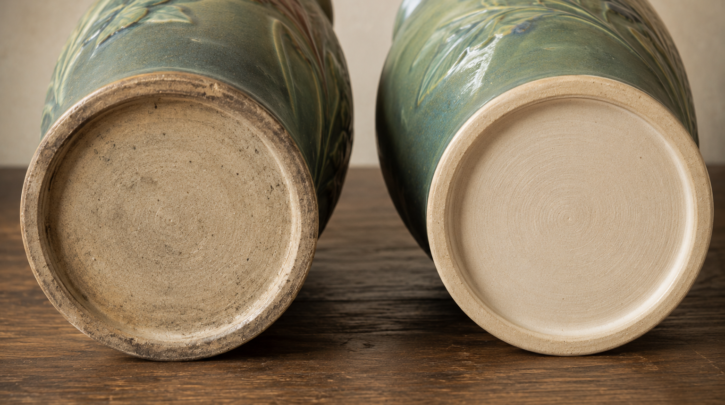
Whether you’re holding fine china, American art pottery, or a piece of utilitarian stoneware, the same core factors determine value — maker, condition, rarity, decoration quality, and dating confidence — even though the weight each factor carries shifts considerably depending on what category you’re actually…
 Written by: Pottery Marks Editorial Team
Posted on: July 11, 2026
Written by: Pottery Marks Editorial Team
Posted on: July 11, 2026
Pottery Reproductions and Fakes: What to Watch For
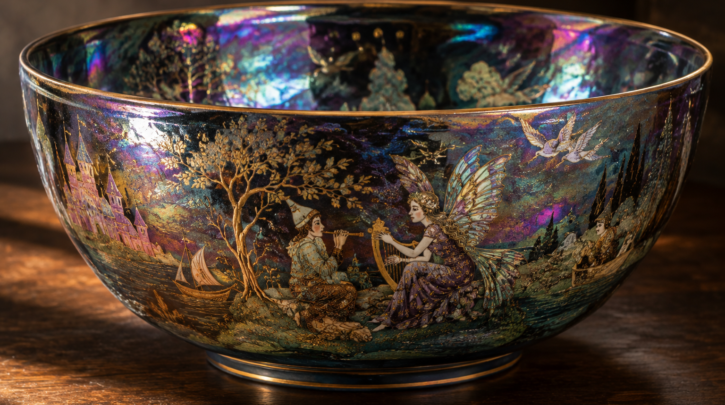
Trademark protection doesn’t last forever, and pottery collecting runs straight into that fact more than most categories. When a company’s trademark on a name or mark lapses — through dissolution, non-renewal, or simple abandonment — that mark generally falls into the public domain. Nobody owns…
 Written by: Pottery Marks Editorial Team
Posted on: July 11, 2026
Written by: Pottery Marks Editorial Team
Posted on: July 11, 2026
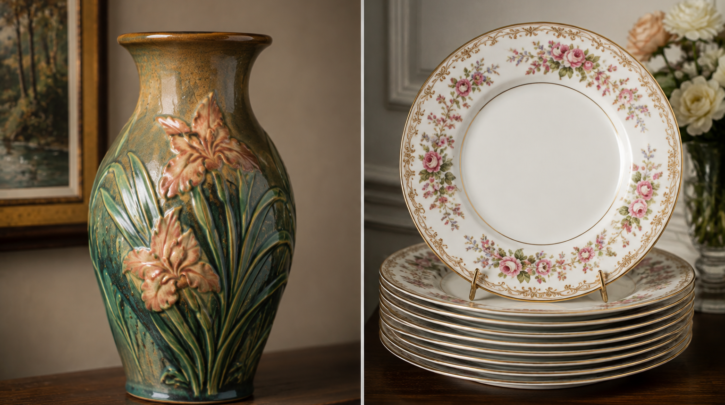
Most Valuable Antique Pottery
A specific, well-documented set of pottery categories consistently commands serious money, and understanding what makes these particular pieces exceptional helps calibrate realistic expectations for everything else in a collection. Rookwood’s Decorator-Attributed Pieces Rookwood pieces confirmed to a specific credited decorator, especially one with an established…
 Written by: Pottery Marks Editorial Team
Posted on: July 11, 2026
Written by: Pottery Marks Editorial Team
Posted on: July 11, 2026
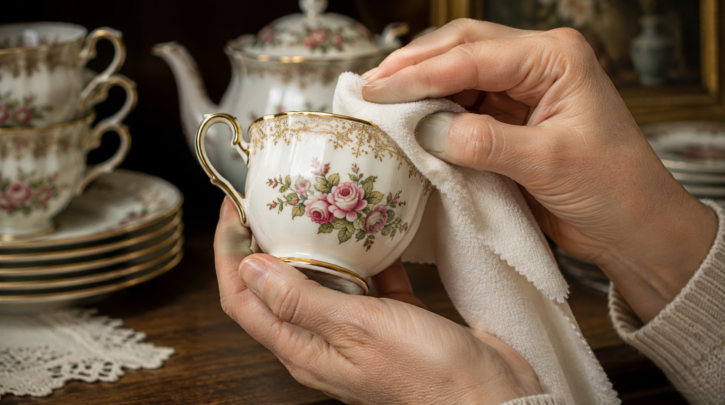
Art Pottery vs. Dinnerware: How Value Really Differs
Art pottery and fine dinnerware are valued through genuinely different lenses — one prioritizes individual artistic merit and rarity, the other prioritizes pattern, maker, and completeness — and understanding that difference changes how you should think about value in each category. Neither Category Has a…
 Written by: Pottery Marks Editorial Team
Posted on: July 11, 2026
Written by: Pottery Marks Editorial Team
Posted on: July 11, 2026
How to Clean Antique Pottery Safely
Cleaning antique pottery safely starts with recognizing that glaze condition and surface type change what’s actually safe to do — a cleaning approach that works fine on a smooth, intact glaze can cause real damage on a crazed, unglazed, or already-cracked piece. Glazed vs. Unglazed…
 Written by: Pottery Marks Editorial Team
Posted on: July 11, 2026
Written by: Pottery Marks Editorial Team
Posted on: July 11, 2026
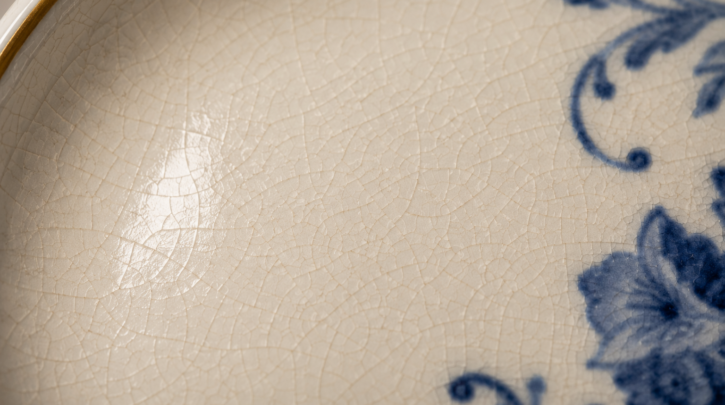
Pottery Crazing Explained
Crazing — the fine, web-like network of cracks visible on the glazed surface of many antique and vintage pottery pieces — is one of the most common condition issues collectors encounter, and understanding what it actually is changes how you should think about it. What…