
Every antique pottery listing implicitly answers a question the buyer is already asking: how do I know this is real? In categories like Roseville, where import reproductions carrying period-style marks have circulated for years, that question isn’t hypothetical skepticism — it’s the buyer’s default assumption. Selling well means answering it before it’s asked, with specifics, rather than after, with reassurance.
That changes what a good listing looks like. “Authentic Roseville, guaranteed” tells a wary buyer nothing they couldn’t have typed themselves. Describing the actual letter shape and slant of the mark, the glaze texture around it, whether “USA” appears where it should, and the wear pattern on the base tells them something a reproduction seller usually can’t or won’t bother to write. The rest of this guide walks through selling antique pottery with that principle built in at every stage, from identification through to the listing itself.
Identify Maker, Mark, and Pattern First
Confirming maker and rough era through the mark, then identifying the specific pattern or line, is the foundation everything else builds on — a piece mispriced because it was misidentified helps no one. This step also does double duty as your first pass at reproduction-proofing the listing: while you’re identifying the mark, note exactly what it looks like, not just what it says. See our marks identification guide for the framework that applies across every category covered on this site, and our guide to reading a pottery backstamp for how to look past the words to the details that actually distinguish genuine marks from reproductions.
Know What Buyers Are Actually Checking For
Before writing anything, it helps to know what a wary buyer is comparing your piece against. For makers with known reproduction activity, that’s usually some combination of the following — and documenting each one in your own listing does more to build trust than any claim of authenticity ever will:
- Letter shape and slant. Genuine marks from a given era were typically applied consistently; reproductions often show subtly different letterforms, spacing, or slant once you compare closely against a known reference example.
- Glaze texture around the mark. An impressed or incised mark on a genuinely old piece usually shows glaze settled naturally into the recessed lettering; some reproductions show glaze that pools or sits differently, a small but telling detail worth photographing.
- Whether “USA” appears. Many genuine American pottery marks include a “USA” designation as part of standard practice for the era; its presence, absence, or exact placement relative to the rest of the mark is one of the more specific things a knowledgeable buyer will check.
- Base wear pattern. A piece that’s genuinely spent decades in use or on display tends to show wear consistent with age — light scuffing, consistent patina — in a way that’s hard to fake convincingly and worth describing plainly.
If you’re selling a maker or pattern known for reproduction activity, our pottery reproductions and fakes guide is worth reviewing before you list — it’ll tell you specifically what buyers researching that maker have already read, so your listing can speak directly to it. Roseville is the clearest example of this; see our Roseville Pottery Guide if that’s what you’re selling.
Clean Gently Before Photographing
A gentle clean before listing genuinely helps a piece show well in photos, but resist the urge to attempt any deeper cleaning or restoration right before a sale — overcleaning can strip away exactly the wear pattern and glaze character a buyer is looking for as evidence of age. See our cleaning guide for the material-specific gentle approach worth using on any piece headed for sale.
Photography That Pre-Empts the Fake Question
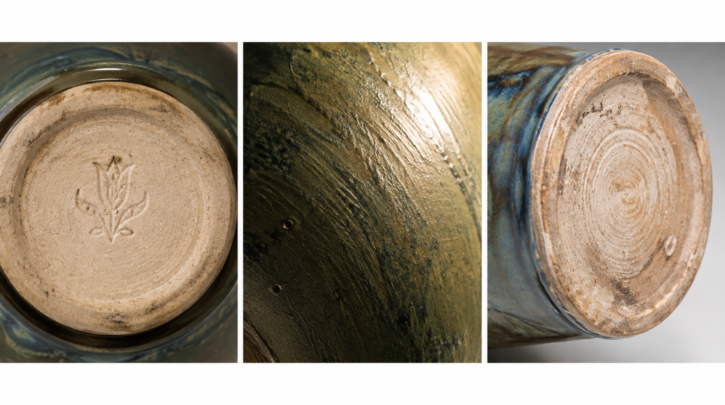
Clear, well-lit photos of the maker’s mark, any decoration detail, and the piece from multiple angles including the base are the minimum. For anything in a reproduction-prone category, go further: shoot the mark straight-on and close enough to read letter shape clearly, get a raking-light shot that shows glaze texture around the mark rather than a flat, glare-free photo that flattens that detail out, and photograph the base wear separately from the mark itself. Collectors buying online rely heavily on these detail shots to confirm maker and condition before purchasing — and for a wary buyer, a listing with five specific mark photos reads very differently than one with a single blurry shot of the whole piece.
Honest Condition Disclosure
Disclosing chips, cracks, crazing, and any prior repairs clearly and specifically, rather than using vague language, protects your reputation as a seller and avoids disputes after a sale. See our repair guide for why undisclosed repairs are particularly risky to conceal given how reliably UV examination can reveal them.
Pricing Without a Melt-Value Floor
Because pottery carries no underlying metal or commodity value, pricing rests entirely on checking recent completed sales for the specific maker, pattern, or line — there’s no baseline figure to fall back on the way there is with sterling or gold. A well-documented mark also tends to support a better price than a vaguely described one, since buyers are willing to pay more for a listing that’s already done the verification work they’d otherwise have to do themselves. See our value guide for how this shapes pricing differently across art pottery and dinnerware.
Choosing Where to Sell
Dinnerware and china patterns generally do best through a service built around pattern matching and set completion, while art pottery and stoneware generally do better through channels built around individual pieces and collector expertise — and where reproduction concerns are highest, a channel with built-in expertise or buyer protection is worth favoring over a fully open marketplace.
Learn how Replacements buys china and dinnerware
Selling Art Pottery and Stoneware
For art pottery, stoneware, and other individually valued pieces, general marketplaces reach the largest possible audience of interested collectors — which makes a well-documented, reproduction-aware listing even more valuable, since it’s doing the work of standing out in a category where buyers have learned to be cautious.
Search antique pottery on eBay
Shipping Pottery Safely
Pottery is genuinely fragile in a way many other collectible categories aren’t — proper packing matters enormously here. Wrap each piece individually in bubble wrap, use a sturdy box with minimal empty space for it to shift around in, and purchase shipping insurance for anything of meaningful value, since a single hard impact can genuinely shatter a piece that survived a century intact.
When a Piece Warrants Extra Care
For anything that seems like it could be a genuinely rare line, a documented artist-attributed piece, or part of a significant pattern, getting a professional appraisal before setting a price is worth the cost — and a written appraisal doubles as exactly the kind of documentation a skeptical buyer wants to see. See our value guide for the factors most likely to push a piece’s worth well above ordinary expectations.
Writing a Listing That Builds Trust
A detailed, specific listing consistently outperforms a vague one, since serious buyers actively search for specific makers and patterns and skip past listings that don’t clearly identify what’s actually being sold. For a piece in a reproduction-prone category, treat the description as your chance to answer the authenticity question directly rather than leave it hanging: name the exact maker and pattern if known, give precise measurements, describe the mark’s letter shape and glaze texture in your own words, note whether “USA” appears and where, and describe the base wear plainly alongside your condition disclosure. Buyers who already know what to look for will notice you did the work — and buyers who don’t will learn what to look for from you, which is its own kind of trust.
Being Patient With Rare Pieces
A genuinely rare line or a piece from a significant maker sometimes takes longer to find the right buyer than a common piece would, simply because the pool of interested collectors is smaller. This is especially true for pieces that need real scrutiny before a serious buyer commits — resist the urge to drop the price prematurely on something truly scarce just because it hasn’t sold in the first week or two.
Selling a Whole Collection at Once
For someone liquidating an entire inherited or accumulated collection rather than a few individual pieces, an estate sale company or a dealer offering to buy the full lot outright can be more practical than listing dozens of individual items one at a time, even though the per-piece return is typically lower than patient individual sales would bring.