
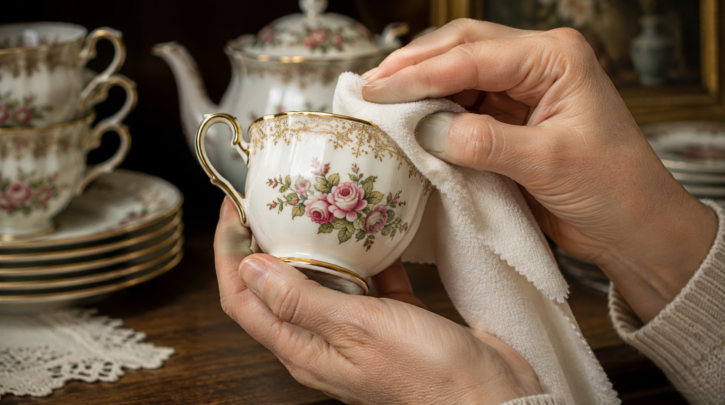

Cleaning antique pottery safely starts with recognizing that glaze condition and surface type change what’s actually safe to do — a cleaning approach that works fine on a smooth, intact glaze can cause real damage on a crazed, unglazed, or already-cracked piece.
Glazed vs. Unglazed Surfaces
Most fine china and glazed art pottery tolerates gentle washing reasonably well, while unglazed or matte surfaces — Jasperware’s characteristic finish is a genuine example — are more porous and can absorb oils and stains more readily, requiring gentler handling; see our Wedgwood china guide for more on why Jasperware specifically needs this different approach.
Never Soak a Crazed or Cracked Piece
Crazing — the fine network of surface cracks that develops in glaze over time — and genuine structural cracks both create pathways for moisture to penetrate beneath the surface, where it can cause visible staining or worsen existing damage; see our crazing guide for how this specific condition develops and why extended soaking is particularly risky for a piece that has it.
Hand Washing Basics
Warm, not hot, water with a mild soap and a soft cloth or sponge handles routine cleaning for most stable, intact glazed pottery — avoid abrasive scrubbing pads, which can dull glaze or wear away delicate hand-painted decoration over repeated cleanings.
Gold Trim Needs Extra Care
Many fine china pieces carry decorative gold trim or gilding, which is genuinely delicate and can wear or fade with abrasive cleaning or harsh detergent — worth using an especially gentle touch on any piece with visible gold decoration, and avoiding the dishwasher entirely for these pieces.
Why Dishwashers Are Risky for Antique Pottery
Dishwasher heat, water pressure, and harsh detergent can worsen existing crazing, stress already-fragile glaze-to-body bonds, and fade hand-painted decoration over repeated cycles — worth hand washing anything genuinely antique or valuable rather than risking this kind of cumulative damage.
Unglazed Areas Need Special Attention
The unglazed foot ring found on many pieces, along with any other unglazed surface, can hold dirt and staining differently than the glazed portions — worth cleaning gently and separately, without assuming the same approach that works on the glazed surface applies equally well here.
Confirm What You’re Working With First
Our free 5-Second Pottery Mark Dating Checklist helps you identify maker and era before deciding how much cleaning risk a specific piece can reasonably handle.
When in Doubt, Clean Less Rather Than More
For any piece where glaze condition, crazing status, or material is genuinely uncertain, a gentle dry or barely damp wipe is always safer than a full wash — dust and light surface grime can be addressed later once you’re more confident about what you’re actually working with.
Cleaning Newly Acquired Pieces
A piece freshly brought home from an estate sale often just needs a gentle wipe to remove years of accumulated dust — resist scrubbing hard at anything that doesn’t come off easily, since aggressive first-cleaning attempts are exactly the kind of heavy-handed treatment most likely to damage a piece whose condition you don’t yet fully understand.
Building a Sustainable Cleaning Routine
Gentle hand washing after use, prompt and complete drying, and reserving deeper cleaning attempts for pieces that genuinely need it together form a routine that protects antique pottery for decades without the cumulative wear that overly aggressive or overly frequent cleaning would cause.
Why Some Pieces Need More Caution Than Others
A piece that’s clearly seen decades of regular use, handling, and previous cleaning generally has more established, stable condition than a piece that’s spent years untouched in storage, where genuinely unknown condition issues might exist — worth treating an unfamiliar piece with a bit more initial caution regardless of how sturdy it looks.
A Quick Reference by Material
| Material/Condition | Safe Approach | Avoid |
|---|---|---|
| Intact glazed china | Warm water, mild soap, soft cloth | Dishwasher, abrasive pads |
| Unglazed/matte (Jasperware) | Dry or barely damp cloth | Soaking, harsh soap |
| Crazed or cracked | Very light dry dusting only | Any soaking or submersion |
| Gold trim | Extra-gentle hand wash only | Dishwasher, abrasive cleaning |