
Reading a pottery backstamp well means working through several distinct pieces of information in a consistent order, rather than trying to absorb everything at once — a practical, repeatable process that gets faster the more pieces you work through.
Step One: Note the Material
Before reading a single word, note whether you’re holding porcelain, earthenware, or stoneware, since this immediately narrows down which makers and conventions are even plausible for what you’re looking at.
Step Two: Check for Country Wording
Look specifically for a country name, and note whether it appears alone or with the word “Made” in front of it — this single detail gives a genuinely reliable rough date range before you’ve read anything else on the mark; see our country-of-origin dating guide for exactly how to interpret this wording.
Step Three: Identify the Maker’s Name or Logo
Look for a company name, initials, or a distinctive logo — this is the piece of information that unlocks maker-specific research, since a confirmed maker narrows your search to that company’s own documented production history and mark evolution.
Step Four: Look for a Pattern Name or Number
Many marks, particularly on fine china and dinnerware, include a separate pattern name or number — genuinely important for anyone trying to identify or match a specific pattern rather than just confirming the maker generally.
Step Five: Note Any Additional Numbers
Extra numbers on a mark could be a British registration number, a pattern number, or a maker-specific date code, depending on the maker and country; see our British registration marks guide for one specific, well-documented example of what these numbers can mean.
Step Six: Note the Mark’s Color and Application
Mark color and application method — impressed, printed, or painted — can offer supporting dating clues on their own, and are worth noting even when they don’t immediately mean anything specific to you, since they may matter once you’re cross-referencing against a maker-specific reference.
Taking a Good Reference Photo
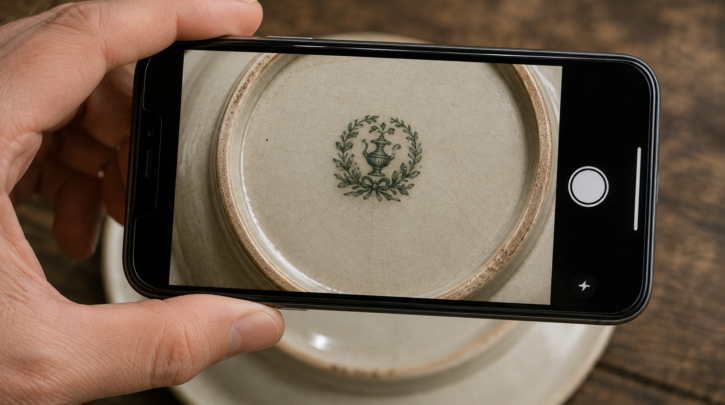
A clear, well-lit, straight-on photo of the entire mark — ideally with a macro or close-up capability to catch fine detail — gives you a genuinely useful reference to compare against published mark guides later, rather than relying on memory or a quick, blurry snapshot.
Cross-Referencing Against Multiple Sources
Comparing an identified mark against more than one reference source before drawing firm conclusions protects against relying on a single source that happens to be incomplete or slightly inaccurate — genuinely worth the extra few minutes for anything where accurate identification actually matters.
Keep This Process Handy
Our free 5-Second Pottery Mark Dating Checklist distills the country-wording dating step into a printable quick reference you can use on the spot.
Practicing on Pieces You Already Own
Working through this six-step process on pieces already in your own home, where the stakes of getting it wrong are low, builds real speed and confidence before applying the same process under the time pressure of an estate sale or antique mall.
When the Backstamp Alone Isn’t Enough
For a piece where the backstamp is worn, ambiguous, or simply doesn’t match anything in your reference sources, physical characteristics become the more important identification tool; see our unmarked pottery identification guide for how to shift to that approach when a mark alone won’t resolve the question.
Common Reading Mistakes to Avoid
Confusing a decorator’s studio mark with the actual manufacturer’s mark, misreading a pattern number as a date code, or assuming every number on a piece is a British registration number are among the most common mistakes new collectors make when first learning to read backstamps — working through the six steps systematically, rather than jumping straight to conclusions about any single element, helps avoid these specific errors.
Slowing down for a full pass through all six steps genuinely pays off, even when a piece seems obvious at first glance.
This methodical habit is what separates confident, accurate identification from an educated guess.