
Starting a pottery collection doesn’t require a big budget or deep expertise on day one — but it does call for one skill before anything else: learning to recognize reproductions in whatever maker or category catches your interest. Pottery is one of the categories most targeted by reproduction pieces, largely because so many well-known marks come from companies whose trademarks have long since expired — which means anyone can legally produce a piece carrying a period-style backstamp. Building real collecting skill starts with knowing how to tell those apart, before it starts with a budget or a focus.
Learn to Recognize Fakes in Your Chosen Maker First
Whatever maker or category eventually pulls you in, spend real time before buying seriously learning what reproductions in that specific area look like. This matters more in pottery than in most collectible hobbies, precisely because an expired trademark means a mark alone can’t be trusted the way it can with an actively protected brand — the mark can be technically accurate and still tell you nothing about whether the piece is genuinely old.
Three checks do most of the work here, and they’re worth practicing on every piece you handle from day one, not saving for once you’re ready to spend real money:
- Mark letter shape and slant. Compare against several confirmed genuine examples — reproductions are often close but not identical in proportion, spacing, or slant.
- Glaze texture around the mark. Genuine impressed or incised marks usually show glaze settled naturally and slightly unevenly into the lettering; reproductions sometimes show glaze that pools too uniformly.
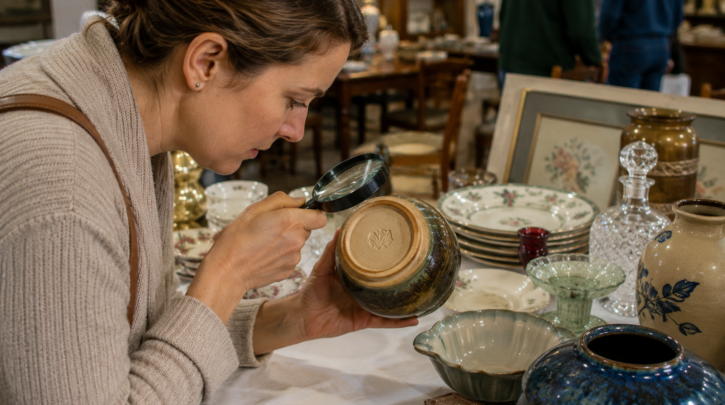
- Unglazed base wear pattern. A genuinely old piece typically shows a base with real dust, light wear, or patina; a suspiciously clean, uniform base on a piece claimed to be decades old is worth real scrutiny.
See our full guide to pottery reproductions and fakes for how these checks work together, and our guide to reading a pottery backstamp for the baseline mark-reading skills they build on. Getting comfortable with this before your first significant purchase is the single highest-leverage thing a new collector can do.
Pick a Focus — It Matters More Here Than Most Hobbies
Pottery collecting spans fine china, American art pottery, and utilitarian stoneware, three genuinely different worlds with their own conventions, communities, and value logic. Deciding early which of these categories, or which specific maker or era within one, actually interests you matters more here than in almost any other collectible hobby — and it also means you’re only building reproduction-detection expertise in one area at a time, which is far more manageable than trying to learn every category’s tells at once.
Start With Common, Affordable Pieces
Common pieces from any major maker are widely available, inexpensive, and forgiving to learn on — building genuine identification confidence on lower-stakes pieces makes it much easier to recognize something genuinely unusual, or genuinely suspicious, later. Low-cost pieces are also a low-risk place to practice the mark, glaze, and base-wear checks without much on the line if you get one wrong.
Build Handling Experience Before Big Purchases
Handling genuine pieces regularly — at shows, shops, or through a collector club — teaches the tactile and visual differences that separate confident identification from guesswork far more effectively than reading alone. See our general identification guide for the core framework worth practicing on every new piece.
Learn Basic Care Before Attempting Anything Risky
Understanding material-specific cleaning and storage before working on a piece that might carry real value protects against irreversible mistakes — and matters even more once reproduction-awareness is part of your routine, since overcleaning a genuine piece can strip away exactly the wear pattern you’re relying on as evidence of age. See our cleaning guide and storage guide for the fundamentals worth learning early.
Set a Realistic Budget
Deciding on a rough spending limit before heading to an estate sale or antique mall, and treating it as a genuine boundary rather than a loose guideline, helps avoid overspending on impulse finds that don’t actually fit your chosen focus.
Connect With the Right Collector Community
Because pottery collecting spans such different worlds, the right community depends on your focus — art pottery societies, stoneware collector groups, and china pattern communities are genuinely distinct groups, each offering identification help and access to reference material specific to that category. These communities are also often the fastest way to learn what reproductions are currently circulating for a specific maker, since members tend to flag them quickly.
Know Where to Buy
Estate sales, antique malls, online marketplaces, and dedicated services each offer a different mix of price, selection, and risk — and venue itself is part of your reproduction defense, since some venues let you inspect a mark and glaze in hand before you commit and others don’t. See our buying guide for what to expect across these different sourcing options.
Keep a Quick Reference Handy From Day One
Our free 5-Second Pottery Mark Dating Checklist gives new collectors a fast, practical starting reference for the single most useful dating trick in the hobby.
Enjoy the Process
Whether the eventual goal is a display collection, pieces to actually use, or both at once, pottery collecting rewards patient, curious exploration more than rushing toward a specific outcome — the learning itself, including learning to spot a fake, is a genuine part of what makes this hobby worthwhile.
A Realistic First-Year Timeline
Most new collectors spend their first several months mostly handling and identifying common pieces, gradually building confidence in both maker identification and reproduction-spotting before making a first genuinely significant purchase. There’s no rush, and moving at this pace consistently produces more satisfied, knowledgeable collectors than trying to assemble an impressive collection quickly.
It’s Fine to Change Focus Over Time
Many collectors start with one category or maker and gradually shift interest as they learn more about the broader hobby — starting with dinnerware and later adding art pottery, or beginning with a single maker and later broadening out, are both common and perfectly reasonable paths rather than a sign of an unfocused start. If a shift in focus means parting with pieces that no longer fit, our guide to selling antique pottery covers how to do that well.
Learning From Mistakes
An early misidentification, an overpaid purchase, or a cleaning attempt that didn’t go quite as planned are all genuinely normal parts of learning this hobby — nearly every experienced collector has a story about an early mistake, and looking back on those moments with humor rather than embarrassment is part of what makes the learning process enjoyable rather than stressful.
Give yourself the same grace you’d extend to any beginner in a genuinely deep hobby — the expertise, including a trained eye for a reproduction, comes with time.