
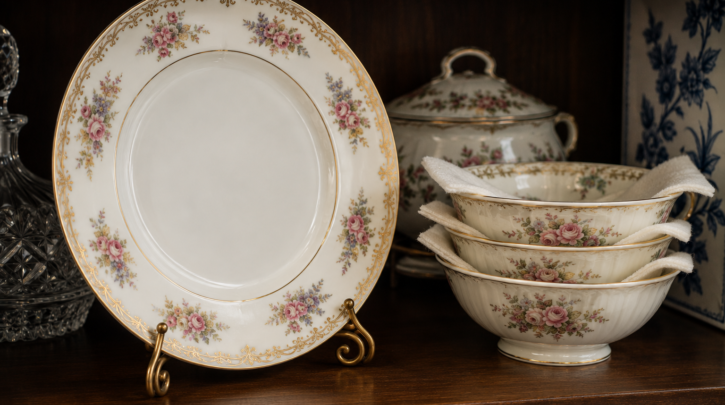

Good storage and display habits prevent far more pottery damage than any cleaning or repair routine ever will, since they address the risk before it causes a problem rather than fixing damage after the fact.
Physical Stability for Displayed Pieces
Display stands and plate hangers designed specifically for pottery genuinely reduce the risk of a piece tipping or falling, particularly in a home with foot traffic, pets, or young children nearby — worth the modest investment for anything genuinely valuable kept on open display rather than in an enclosed cabinet.
Never Stack Pieces Directly Against Each Other
Stacking plates or bowls directly, without any separator, risks rim chips from the simple contact between pieces — felt, paper, or purpose-made separators between stacked pieces prevent this entirely avoidable kind of damage.
Light Exposure Can Fade Decoration
Prolonged direct sunlight can genuinely fade hand-painted decoration and certain glaze colors over time, similar to how some gemstones fade with extended light exposure — worth keeping genuinely valuable or delicately decorated pieces out of direct sun rather than assuming ceramic decoration is immune to this kind of gradual light damage.
Stable Humidity and Temperature
Extreme or frequent fluctuations in humidity and temperature can accelerate crazing and stress the bond between glaze and clay body over time; see our crazing guide for how this specific condition develops, and why a stable storage and display environment helps slow it down.
Lifting Pieces Correctly
Lifting a piece with both hands supporting the body, rather than by a handle alone, protects against handle failure — a genuine risk on aged or previously repaired handles, which may not be as structurally sound as they look.
Minimizing Unnecessary Handling
Cleaning around displayed pottery without moving fragile pieces more than necessary reduces the number of opportunities for an accidental drop or bump — a simple habit that meaningfully lowers cumulative risk over years of regular household cleaning.
A Simple Long-Term Care Routine
Stable display stands, separators between stacked pieces, indirect lighting, consistent humidity, careful two-handed lifting, and minimal unnecessary handling together protect a pottery collection for decades without requiring constant active intervention.
Traveling With Pottery
For pottery being transported, whether to a new home or simply to a family gathering, wrapping each piece individually and packing snugly enough to prevent pieces from knocking against each other protects against both breakage and the kind of chip-causing contact that can happen during transit far more effectively than loose packing.
Insurance and Documentation Considerations
Photographing pieces before storing or displaying them, especially anything of meaningful value, creates a useful visual record for insurance purposes and makes it easier to notice if a piece’s condition changes over time between inspections.
Storing a Mixed Collection
For a large inherited collection with mixed condition and value, sorting into separate storage or display priorities — genuinely valuable or fragile pieces getting the most careful treatment, sturdier common pieces handled more casually — makes protecting the collection as a whole considerably more manageable than treating every piece identically.
Revisiting Storage as a Collection Grows
What worked for a handful of pieces often stops working as a collection grows, and periodically reassessing whether current storage still separates pieces properly, controls light and humidity adequately, and prevents stacking damage is worth doing every so often rather than assuming an early storage setup will scale indefinitely.
A Genuine Investment in Longevity
Time spent setting up thoughtful storage and display is genuinely one of the highest-value, lowest-effort things a collector can do — unlike cleaning or repair, good storage prevents damage from ever happening in the first place rather than fixing it after the fact.