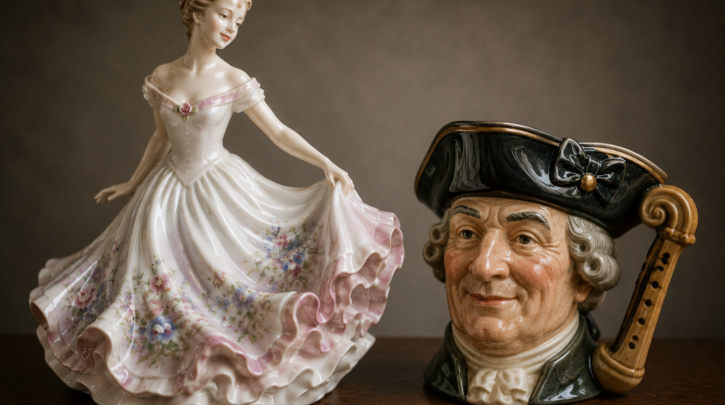

Royal Doulton built its reputation across two genuinely distinct collecting worlds — fine tableware on one side, and HN-numbered figurines and character jugs on the other, each with its own dedicated collector base and its own conventions for identification and value.
A Backstamp That Evolved for Over a Century
Royal Doulton’s backstamps evolved continuously from 1815 through to the present day, with the well-known lion-and-crown mark specifically dating to 1902 — a genuinely long, well-documented evolution that makes backstamp style itself a useful rough dating tool; see our reading backstamps guide for the general principle of using mark evolution to narrow down an approximate era.
HN Numbers: A Genuine Cataloging System
Every Royal Doulton figurine carries a unique HN number, a genuine internal cataloging system that identifies a specific figurine independent of whatever style or subject name it was marketed under — a reliable way to confirm exactly which figurine you’re holding even when two similarly named pieces might otherwise cause confusion.
Retired Figurines Command Real Premiums
Royal Doulton periodically retires specific figurine designs from production, and retired HN pieces generally command meaningfully stronger prices than figurines still in active production, reflecting the same active-versus-retired dynamic that shapes value across many collectible categories once a specific design is no longer available new.
Character Jugs: A Distinct Sub-Category
Beyond figurines, Royal Doulton’s character jugs — mugs and pitchers sculpted in the likeness of a specific historical figure, literary character, or notable personality — form their own genuinely dedicated collecting niche within the broader Royal Doulton catalog, distinct enough in both form and collector interest to be treated as its own category.
Fine Tableware Alongside the Figurines
Separate from the figurine and character jug side of the business, Royal Doulton also produced substantial fine tableware lines, following the same general country-of-origin and backstamp dating principles that apply across British pottery broadly; see our country-of-origin dating guide for how to date a Royal Doulton tableware piece using the same framework.
Finding Royal Doulton Pieces
Whether you’re chasing a specific retired figurine or trying to complete a tableware pattern, Royal Doulton’s long production history means pieces turn up regularly across a wide range of buying channels.
Search Royal Doulton patterns and figurines Search Royal Doulton at Replacements, Ltd.
Figurine Condition Matters Enormously
Because figurines are three-dimensional sculptural pieces with delicate extended elements — raised arms, flowing skirts, small accessories — chips and repairs affect value more severely than comparable damage would on a flat tableware piece, making careful condition assessment especially important for this side of Royal Doulton collecting.
Building Expertise Across Two Different Collecting Worlds
A collector focused purely on Royal Doulton tableware and one focused purely on HN figurines are pursuing genuinely different hobbies under one company name, and it’s worth deciding relatively early which side of the Royal Doulton catalog actually interests you rather than trying to become expert in both at once.
Character Jugs Come in Multiple Sizes
Many character jug designs were produced in several different sizes — large, small, and sometimes miniature versions of the same character — and size matters as much as the specific character depicted when identifying and valuing a piece, since size variants of the same design aren’t interchangeable in terms of rarity or price.
Doulton Lambeth: An Earlier Chapter
Before the company became known primarily for fine bone china and figurines, Doulton’s earlier Lambeth production focused on stoneware, including architectural and decorative pieces distinct in both material and style from the later work most collectors associate with the Royal Doulton name today — worth knowing this earlier chapter exists if you encounter a Doulton-marked stoneware piece that doesn’t match the fine china or figurine conventions covered here.
A Company Name That Changed Over Time
The “Royal” designation itself reflects a specific historical milestone in the company’s recognition, consistent with the general pattern across British pottery where the word “Royal” in a company name typically indicates later production; see our marks identification guide for this general dating principle applied across British makers.
Combining this general rule with the piece’s other specific mark details gives a more confident overall date estimate.