 Written by: Pottery Marks Editorial Team
Posted on: July 11, 2026
Written by: Pottery Marks Editorial Team
Posted on: July 11, 2026
Pottery Value Guide: What Actually Drives Price
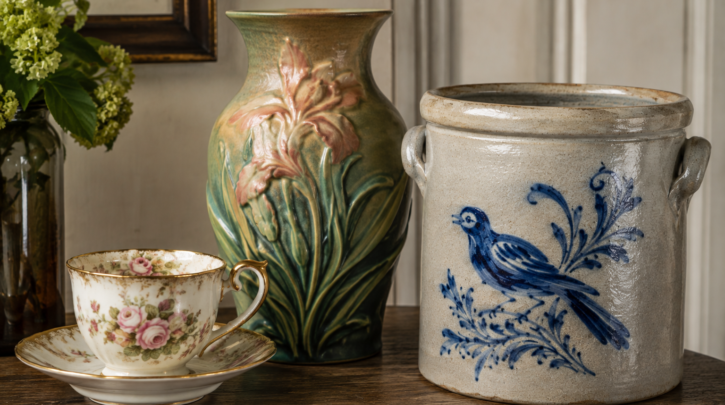
Whether you’re holding fine china, American art pottery, or a piece of utilitarian stoneware, the same core factors determine value — maker, condition, rarity, decoration quality, and dating confidence — even though the weight each factor carries shifts considerably depending on what category you’re actually…
 Written by: Pottery Marks Editorial Team
Posted on: July 11, 2026
Written by: Pottery Marks Editorial Team
Posted on: July 11, 2026
Pottery Reproductions and Fakes: What to Watch For
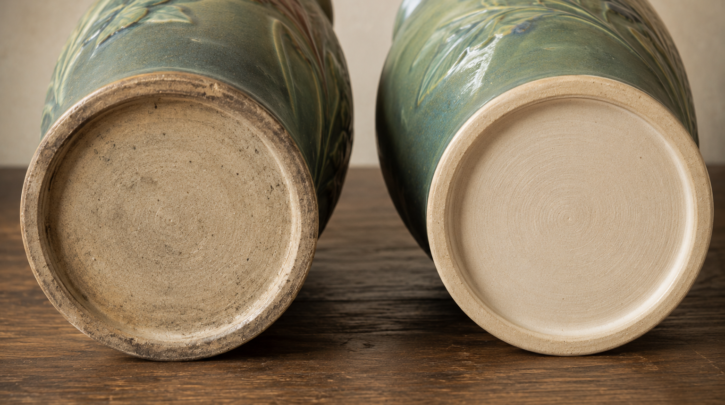
Trademark protection doesn’t last forever, and pottery collecting runs straight into that fact more than most categories. When a company’s trademark on a name or mark lapses — through dissolution, non-renewal, or simple abandonment — that mark generally falls into the public domain. Nobody owns…
 Written by: Pottery Marks Editorial Team
Posted on: July 11, 2026
Written by: Pottery Marks Editorial Team
Posted on: July 11, 2026
Most Valuable Antique Pottery
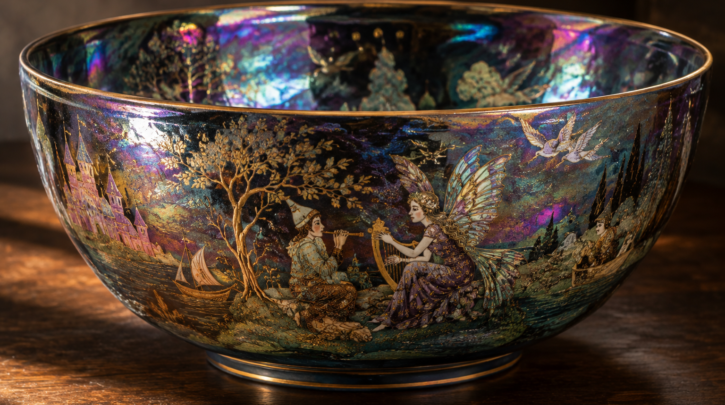
A specific, well-documented set of pottery categories consistently commands serious money, and understanding what makes these particular pieces exceptional helps calibrate realistic expectations for everything else in a collection. Rookwood’s Decorator-Attributed Pieces Rookwood pieces confirmed to a specific credited decorator, especially one with an established…
 Written by: Pottery Marks Editorial Team
Posted on: July 11, 2026
Written by: Pottery Marks Editorial Team
Posted on: July 11, 2026
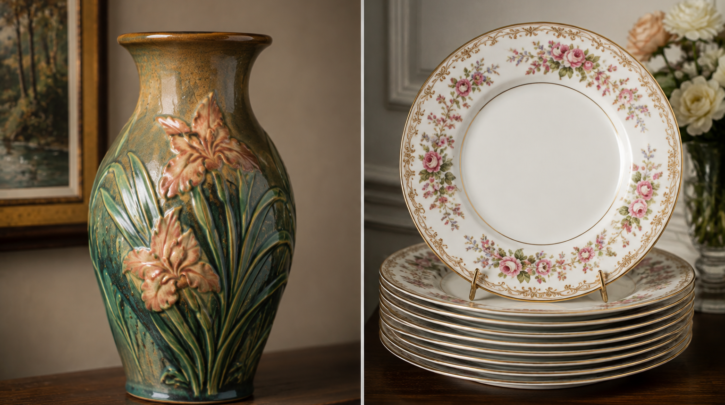
Art Pottery vs. Dinnerware: How Value Really Differs
Art pottery and fine dinnerware are valued through genuinely different lenses — one prioritizes individual artistic merit and rarity, the other prioritizes pattern, maker, and completeness — and understanding that difference changes how you should think about value in each category. Neither Category Has a…