
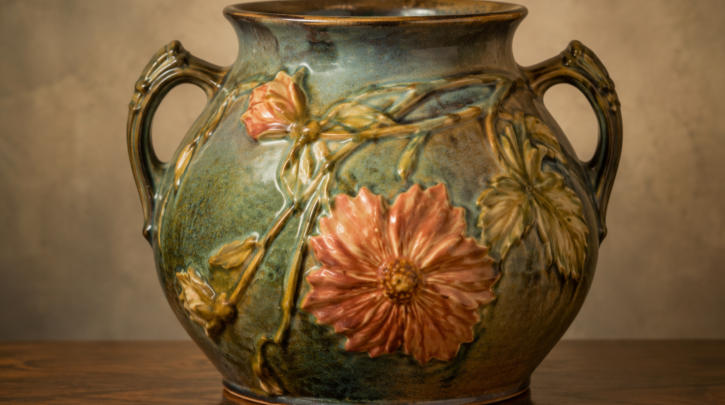

Weller Pottery grew into one of the largest American art pottery producers by sheer volume, operating from the same general Ohio region that made this area a genuine historic center of the broader American art pottery movement.
A Shared Regional History
Weller operated in close proximity to other major names in American art pottery, and the region’s potteries shared more than just geography — decorators and designers sometimes moved between companies over the course of their careers, which means researching one maker’s history often illuminates the others too; see our Roseville pottery guide and Rookwood pottery guide for the other major names from this same regional tradition.
A Wide Range of Quality Tiers
Like Roseville, Weller’s output spans a genuinely wide range — high-end, artist-decorated art lines at one end, and considerably more affordable, mass-market pieces at the other — worth evaluating each specific piece or line on its own merits rather than assuming uniform value across the entire Weller catalog.
Reading Weller Marks
As with other major art pottery makers from this era, Weller’s marking conventions changed across its operating history, so confirming which specific era a given mark style belongs to matters for accurate dating; see our reading backstamps guide for the general process worth applying to any Weller piece.
Artist-Decorated Lines Command Real Premiums
Weller’s higher-end art lines, decorated by named individual artists in the same general tradition as Rookwood’s credited decorators, command genuinely stronger collector interest and pricing than the company’s more mass-produced output — identifying whether a piece falls into this higher tier matters considerably for an accurate value assessment.
Condition Matters Especially for Glazed Art Pottery
Chips, cracks, and glaze damage all meaningfully reduce value on art pottery specifically, since the glaze and surface treatment is so central to what makes a piece desirable in the first place; see our cleaning guide for how to care for glazed art pottery without risking this kind of damage.
Finding Weller Pieces
Given Weller’s large production volume, pieces from the company’s more common lines are widely available, while genuinely rare artist-decorated examples require more patient, targeted searching across specialist channels.
Search current Weller listings Search Weller pottery on eBay
Comparing Weller Against Its Regional Peers
Because Weller, Roseville, and Rookwood all operated within the same general era and region, comparing a specific piece against documented examples from all three makers, rather than assuming a piece belongs to whichever name comes to mind first, helps confirm the correct attribution; see our marks identification guide for the broader identification framework worth applying when several similar makers are genuinely plausible.
Building Familiarity With Weller’s House Style
Handling and comparing several confirmed genuine Weller pieces, ideally alongside Roseville and Rookwood examples, builds a real feel for the subtle stylistic differences that separate these regionally related but genuinely distinct makers — a skill that develops with practice rather than something learned from a single reading of any guide.
Weller’s Genuine Range of Forms
Beyond vases and decorative vessels, Weller produced a genuinely wide range of forms including garden pottery, architectural pieces, and figural work, reflecting the company’s scale and its willingness to serve multiple different segments of the broader decorative pottery market at once.
That range means there’s genuinely a place to start collecting Weller regardless of budget or specific aesthetic preference.
Weller’s Own Later Corporate Changes
As with other long-running potteries from this era, Weller’s ownership and operational structure changed over the decades, which is worth keeping in mind when researching a specific piece’s exact production context beyond just the general era its mark suggests.
A Practical Starting Point for New Collectors
Given Weller’s genuinely wide range of price points, starting with the company’s more common, affordable output builds real identification confidence before moving toward the rarer, artist-decorated pieces that command serious collector attention — the same patient, gradual approach that pays off across every collectible category on this site.