
A specific, well-documented set of pottery categories consistently commands serious money, and understanding what makes these particular pieces exceptional helps calibrate realistic expectations for everything else in a collection.
Rookwood’s Decorator-Attributed Pieces
Rookwood pieces confirmed to a specific credited decorator, especially one with an established individual reputation, command genuinely strong collector interest well above typical factory-decorated output; see our Rookwood pottery guide for how the company’s genuinely precise flame-mark dating system supports this kind of confident attribution.
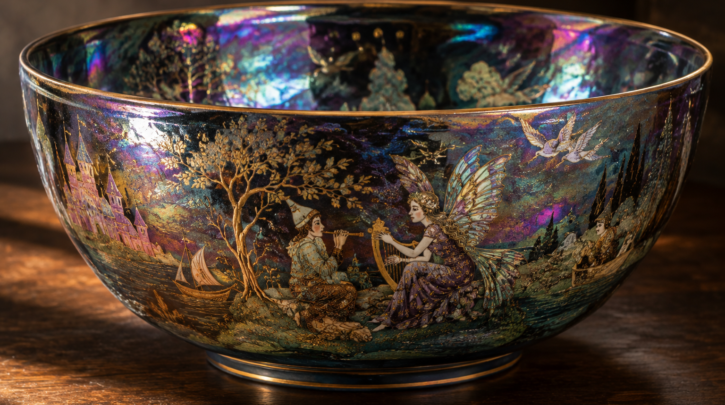
Wedgwood’s Fairyland Lustre
Designed by Daisy Makeig-Jones and produced only between 1915 and 1931, Fairyland Lustre pieces are widely regarded as among the most valuable British china ever made; see our Wedgwood china guide for more on this specific, genuinely exceptional line.
Genuine Early Nippon Porcelain
Confirmed genuine Nippon-marked porcelain, particularly hand-painted or artist-signed examples, commands a real premium over later Japan-marked pieces of comparable design; see our Nippon marks guide for why this precise thirty-year window carries such consistent collector demand.
Rare Roseville and Weller Lines
Within both Roseville’s and Weller’s enormous production catalogs, specific rare lines command premiums well above the companies’ more common mass-market output; see our Roseville pottery guide and Weller pottery guide for how to distinguish these rarer lines from each company’s broader, more affordable catalog.
What These Examples Have in Common
Documented rarity, confirmed attribution, and genuinely exceptional decorative or artistic quality show up across every one of these headline examples — the same combination of factors that drives exceptional value across essentially every collectible category covered on this site.
Most Antique Pottery Isn’t Especially Valuable
It’s worth being honest: the vast majority of antique and vintage pottery, even genuinely old and well-made pieces, carries modest value — these headline examples represent real exceptions rather than a typical outcome, and assuming every old piece in a china cabinet is a hidden treasure leads to disappointment more often than not.
Distinguishing Genuine Rarity From Ordinary Age
Confirming a mark, comparing a piece against documented examples of genuinely rare lines, and checking recent completed sales for comparable pieces separates real rarity from simple age — age alone has never been what makes pottery valuable.
Where These Pieces Turn Up
Genuine rarities surface through the same channels as any other pottery — estate sales, specialty dealers, and online marketplaces — though patient, ongoing searching matters more than expecting to find one on any single trip, given how genuinely scarce the top examples are.
A Realistic Expectation
Most collectors, even those active in the hobby for years, never personally stumble across one of these headline rarities by pure chance — the majority acquire them, if at all, through deliberate purchases from specialist dealers specifically because a confirmed example is being offered, rather than by accident at a random sale.
Building Toward Confident Rarity Recognition
Recognizing a genuine rarity confidently, rather than hoping a common piece might be something special, comes from the same patient identification skill-building covered throughout this site — the more familiar you are with ordinary pieces, the more a genuine rarity will actually stand out.
A Realistic Approach to a Large Collection
For a genuinely large inherited or accumulated collection, working through pieces systematically — confirming maker, checking for any of the specific headline categories covered here, then researching recent completed sales for anything that seems genuinely promising — beats trying to assess every piece with equal depth from the start.
Documenting Suspected Rarities
For a piece that seems like it might fit one of these exceptional categories, photographing the mark, form, and any decoration in detail, then researching against documented genuine examples before assuming the best, protects against both overselling a common piece and underselling a genuinely rare one.