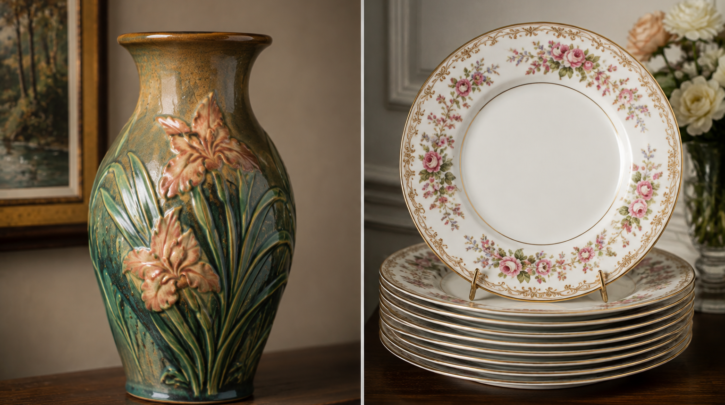

Art pottery and fine dinnerware are valued through genuinely different lenses — one prioritizes individual artistic merit and rarity, the other prioritizes pattern, maker, and completeness — and understanding that difference changes how you should think about value in each category.
Neither Category Has a Melt-Value Floor
Unlike sterling silver or gold jewelry, pottery in any category — art pottery or dinnerware alike — carries no underlying commodity-tied melt value at all. Every dollar of pottery value rests entirely on collector demand for that specific piece, maker, or pattern, with no metal-backed floor functioning as a safety net beneath a piece that falls out of collector favor.
Art Pottery: Valued as Individual Artistic Objects
Art pottery value centers on the individual piece — its specific form, glaze, decoration quality, and often a credited individual artist or decorator; see our Rookwood pottery guide for the clearest example of how individual artist attribution shapes value in this category.
Dinnerware: Valued as Part of a Pattern and Set
Fine china and dinnerware value centers much more on maker, pattern, and completeness — a single plate from a popular, well-documented pattern is worth considerably more to someone trying to complete an existing set than the same plate would be valued as a standalone artistic object; see our Wedgwood china guide and other maker guides in that category for how pattern completion drives demand.
This Shapes How Each Category Gets Sold
Art pottery tends to sell through channels built around individual pieces and collector expertise, while dinnerware tends to sell through channels built around pattern matching and set completion — worth choosing the right channel for the specific category of pottery you’re trying to sell or buy.
Both Categories Deserve Genuine Collector Respect
Neither category is inherently more legitimate or valuable than the other — an exceptional art pottery piece and a complete, rare dinnerware pattern can both command serious money, just through genuinely different collector logic.
Appraisal Approach Differs Between the Two
An art pottery appraisal focuses heavily on artist attribution, rarity, and condition research, while a dinnerware appraisal weighs pattern identification, completeness, and maker reputation more heavily — worth finding an appraiser with relevant experience in the specific category you actually own; see our value guide for the shared framework both approaches build on.
A Practical Takeaway
Before assuming a piece’s value based on category alone, confirm which kind of pottery you’re actually holding, then apply the value logic that actually governs that category — an exceptional art pottery piece and a modest, common dinnerware pattern can easily land on opposite sides of expectations set by assuming one universal pottery value framework applies everywhere.
Neither Category Is Inherently the ‘Better’ Focus
Art pottery offers the satisfaction of individual artistic appreciation and attribution research, while dinnerware offers the satisfaction of completing a genuinely usable set with real family or historical significance — neither approach is objectively superior, and many serious collectors deliberately pursue both.
Building Expertise in Either Category Takes Time
Whether focusing on art pottery’s artist and rarity research or dinnerware’s pattern and maker research, real expertise develops through handling genuine pieces repeatedly and comparing them against documented examples — there’s no shortcut that replaces this kind of hands-on, accumulated experience in either category.
How This Plays Out When Selling
Selling art pottery usually depends on finding a buyer who specifically values that artist, form, or rarity, while selling dinnerware often depends on finding a buyer trying to complete an existing set in that exact pattern — both require identification and research, but the specific research that matters differs meaningfully between the two.
Recognizing which market you’re actually selling into shapes everything from pricing to where you should list a piece.