
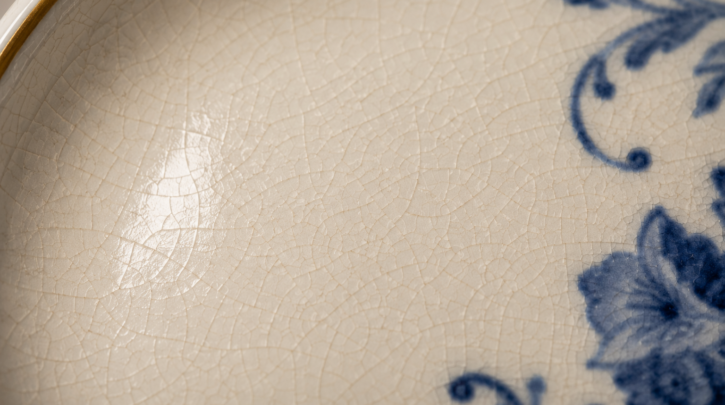

Crazing — the fine, web-like network of cracks visible on the glazed surface of many antique and vintage pottery pieces — is one of the most common condition issues collectors encounter, and understanding what it actually is changes how you should think about it.
What Crazing Actually Is
Crazing affects only the glaze layer itself, a thin surface coating, rather than the underlying clay body — a genuinely important distinction from a true crack, which extends into the clay body and represents more serious structural damage.
Why Crazing Happens
Crazing develops because the glaze and the clay body beneath it expand and contract at slightly different rates in response to temperature and humidity changes over time — this differential stress, accumulated gradually over decades, eventually causes the thin glaze layer to develop this characteristic network of fine surface cracks.
Crazing vs. a Genuine Crack
It’s worth being clear about this distinction: crazing is a surface-level glaze condition, while a genuine crack compromises the structural clay body itself and represents a more serious form of damage; see our repair guide for how these two genuinely different conditions are addressed differently by a professional restorer.
Why Crazing Leads to Staining
Once crazing develops, the fine cracks can absorb liquids, oils, and other staining agents over time, producing the visible dark lines many collectors associate with older crazed pieces — worth knowing that the crazing itself and the staining that often follows it are two related but genuinely separate aspects of the same underlying condition.
Crazing’s Impact on Value
Crazing generally reduces collector value to some degree, though the impact varies considerably by category and severity — light, even, unstained crazing is viewed quite differently than heavy, dark, unevenly stained crazing; see our value guide for how condition factors into overall worth alongside maker and rarity.
Crazing Generally Can’t Be Reversed
Once crazing has developed, there’s no genuine way to reverse it and restore the glaze to its original uncrazed state — worth being honest about this rather than assuming any cleaning or treatment can fully undo crazing that has already formed.
Minimizing Further Crazing
Avoiding extreme or sudden temperature changes — hot liquid in a cold piece, or the reverse — and keeping pottery in a reasonably stable humidity environment both help slow the development of further crazing over time, even though existing crazing can’t be undone.
Crazing Is Genuinely Common, Not a Red Flag
Given how many decades most antique pottery has survived, some degree of crazing is a genuinely normal condition to encounter rather than a sign something is unusually wrong with a specific piece — worth assessing severity and staining honestly rather than treating any crazing at all as disqualifying.
Checking for Crazing Before Buying
Examining a piece closely under good light, ideally from several angles, reveals crazing that might not be obvious at a casual glance — worth doing this check specifically before any purchase where condition meaningfully affects the price you’re willing to pay.
Crazing Across Different Pottery Categories
Crazing shows up across fine china, art pottery, and some glazed stoneware alike, since it’s a general property of how glaze and clay body interact rather than something specific to one particular category — worth checking for it regardless of what kind of glazed pottery you’re examining.
A consistent inspection habit catches condition issues before they factor into a purchase decision rather than after.
A Note on ‘Sick’ Glass and Similar Terms
Some collectors of other glazed or glass materials use different terminology for related surface conditions, but crazing specifically refers to this glaze-cracking phenomenon in ceramics — worth using the precise term when researching or discussing a piece’s condition with other collectors or a potential buyer.