
A genuinely large share of pottery in circulation today carries no mark at all — some pieces simply predate systematic marking conventions, others had marks worn away by decades of use, and identifying these pieces requires a different, more physical approach.
Why So Much Pottery Is Unmarked
Especially early hand-thrown pieces, made before marking became a standard industry practice, were often produced without any systematic maker identification at all — a genuine historical reality rather than a sign that anything is unusual about an old, unmarked piece.
Examining the Clay Body
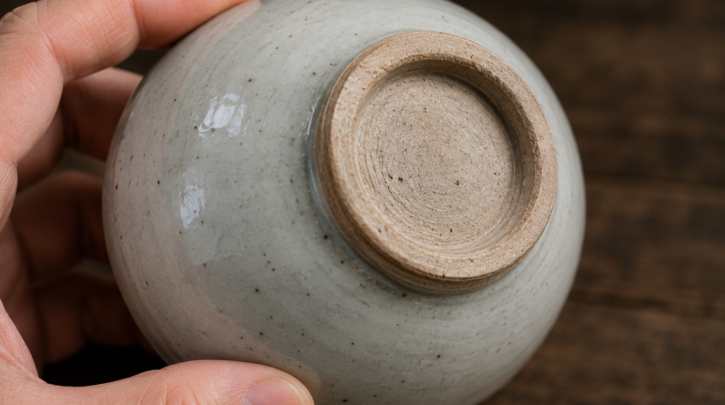
The color, texture, and density of a piece’s clay body, particularly visible at any unglazed area like a foot ring, offers real identification information — different regions and makers tended toward characteristic clay sources, and a trained eye can narrow down likely origin from clay characteristics alone.
Glaze Characteristics
Glaze color, thickness, texture, and any characteristic crackling or pooling pattern varied between makers and regions in ways that can support identification even without a mark to work from; see our crazing guide for one specific glaze characteristic worth understanding on its own terms.
Form and Shape Conventions
Certain makers and regions favored characteristic forms, proportions, and handle or foot styles, and comparing an unmarked piece’s overall shape against documented examples from known makers can sometimes support a reasonable, if not certain, attribution.
Decoration Style as a Clue
Decorative technique and style — hand-painted versus transfer-printed, specific color palettes, characteristic motifs — often points toward a particular region or era even when it can’t confirm an exact maker, narrowing the field of realistic possibilities.
Comparing Against Documented References
Specialist collector communities and reference guides have documented characteristic features for many unmarked or inconsistently marked wares, and cross-referencing an unfamiliar piece against these resources is often more productive than trying to identify it from general knowledge alone.
It’s Okay to Not Know for Certain
Many unmarked pieces will simply never be attributed to a specific maker with real confidence, and that’s a perfectly normal outcome rather than a failure of research — an unattributed piece can still be a genuinely valuable and worthwhile piece to own regardless of whether its exact origin is ever confirmed.
Value Implications of Unmarked Pieces
Unmarked pieces generally sell for less than confidently attributed pieces from recognized makers, since collector interest is substantially tied to maker recognition; see our value guide for how attribution factors into overall value alongside condition and rarity.
Unmarked Pieces as a Genuine Specialty
Some collectors find unmarked pieces more interesting precisely because of the detective work involved — there’s real satisfaction in narrowing down a likely maker or region through careful physical comparison rather than simply reading a name off the bottom of a piece.
Building a Personal Reference Collection
Photographing confirmed genuine pieces from documented makers, including close-up shots of clay body, glaze, and form, builds a personal reference that becomes genuinely useful the next time an unmarked piece raises a question — the same approach that pays off across every collectible category.
Weight and Thickness as Supporting Clues
How heavy a piece feels for its size, and how consistent its wall thickness is, offer additional physical clues worth noting alongside clay body and glaze — different production eras and methods tended toward characteristic weight and thickness patterns that a trained eye learns to recognize with enough hands-on comparison.
Combining several of these physical checks together gives a far more confident read than relying on any single characteristic alone.
Foot Ring Details
The unglazed foot ring on the base of a piece, where it rested during firing, often reveals genuine information invisible anywhere else on a glazed piece — kiln marks, clay color, and firing residue all show up clearly at this one unglazed point, making it worth examining closely on any unmarked piece even when the rest of the surface offers little to go on.
When to Seek a Specialist Opinion
For a piece that seems genuinely old or well-made but resists identification through your own research, a specialist familiar with a specific region or era can sometimes recognize characteristics that don’t show up clearly in general reference material — worth pursuing for anything where the potential value justifies the extra effort.